Running a business in today’s competitive world is not easy. Companies have to manage finance, HR, sales, inventory, and customer service all at once. When these processes are handled separately, it often leads to errors, delays, and loss of money. In this blog, we’ll explore what ERP software is, why it’s important, and how it can transform the way businesses operate.
What is ERP Software?
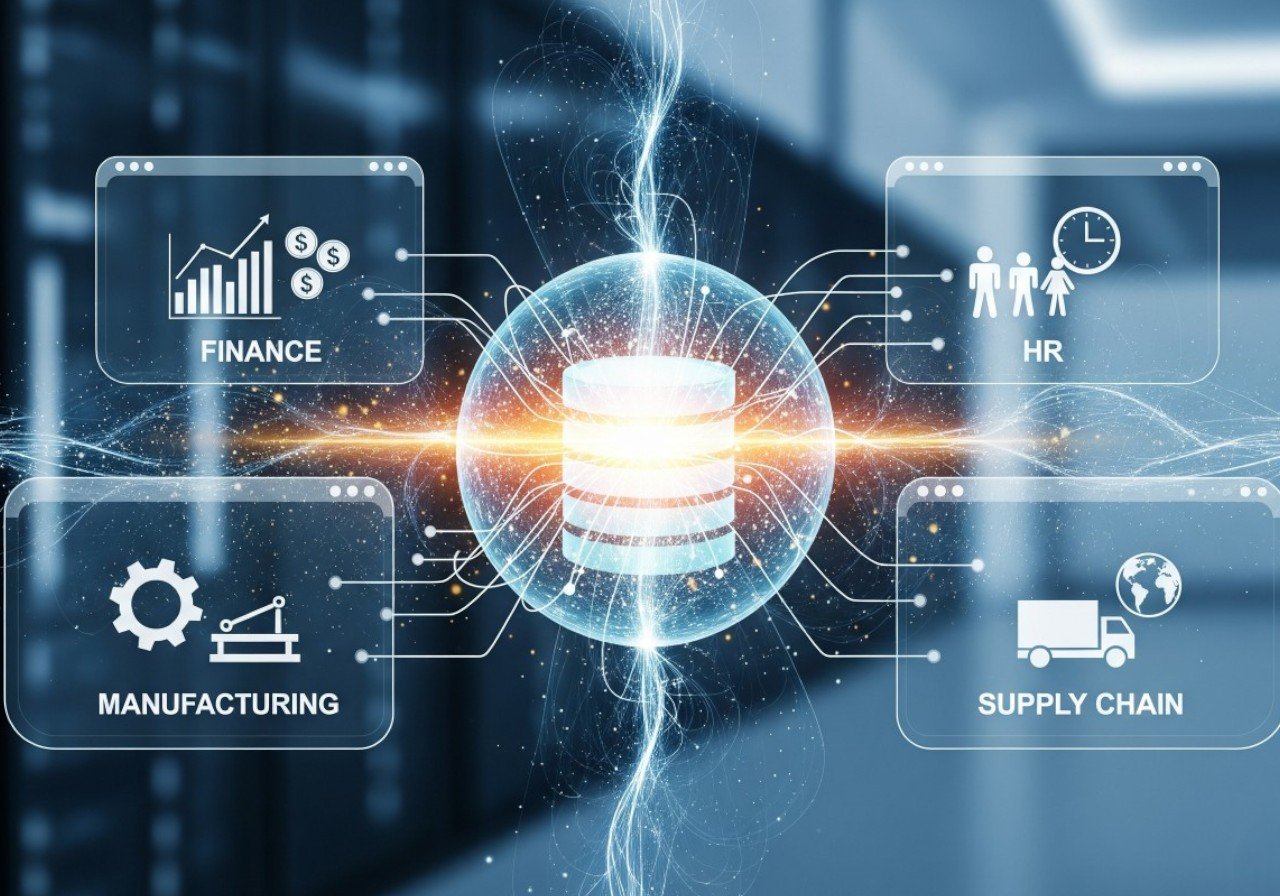
ERP (Enterprise Resource Planning) software is an all-in-one business management solution. It integrates different functions like accounting, supply chain, HR, and sales into a single system. Instead of using separate software for each department, ERP provides a centralized platform where everything connects seamlessly.
Why is ERP Important?
Without ERP, businesses often face:
- Scattered and unorganized data
- Delays in communication between departments
- Higher operational costs
- Difficulty in decision-making
ERP solves these problems by providing a single source of truth for all departments, improving efficiency and saving time.
Key Features of ERP Software
Features of ERP include:
- Accounting & Finance: Manage invoices, payroll, and expenses.
- Inventory Management: Track stock levels, orders, and deliveries.
- Human Resources (HR): Employee management, attendance, and recruitment.
- Customer Relationship Management (CRM): Handle customer data and improve service.
- Supply Chain Management: Streamline procurement and logistics.
- Reporting & Analytics: Generate insights for better decision-making.
Benefits of ERP Software
Implementing ERP can bring several benefits:
- Saves time and cost by automating tasks
- Improves productivity across departments
- Centralized data access for transparency
- Better decision-making with real-time insights
- Scalability to support business growth
Types of ERP Solutions
There are three main types of ERP solutions:
- On-premise ERP: Installed on company’s own servers.
- Cloud ERP: Hosted on the cloud, accessible anytime and anywhere.
- Hybrid ERP: A combination of both.
Industries That Use ERP
ERP is not limited to large organizations. Different industries use it, such as:
- Manufacturing
- Retail & E-commerce
- Healthcare
- Education
- Construction
- Small & Medium Businesses
How to Choose the Right ERP Software?
When selecting ERP software, consider:
- Size of your business and requirements
- Budget and scalability
- Customization options
- Vendor support and training
Conclusion
Whether you are a small business or a large enterprise, ERP can help streamline operations, reduce costs, and give you a competitive edge. If you want your business to stay ahead in 2025, it’s time to consider ERP software as your growth partner.
FAQs
Q1. What does ERP stand for?
ERP stands for Enterprise Resource Planning.
Q2. Is ERP only for large companies?
No, small and medium businesses also benefit greatly from ERP.
Q3. What is the difference between ERP and CRM?
ERP manages the entire business (finance, HR, supply chain), while CRM mainly focuses on customer relationships and sales.